
Notes from a burning Paris
wondering what collapse looks like? it's

I write to you from a cafe in a small neighbourhood on the outskirts of Paris1. I’ve been here almost five hours on my laptop ordering a nonsensical array of beverages and foodstuffs every hour or so, to pay my way. The place is packed. Kids are playing chess (school has been cancelled), dogs are under the tables, the elderly are reading, people are whispering into their phones, trying to hold work Zoom calls. Down the back is a woman with a conductor’s baton rehearsing some score she’s listening to on her tablet.
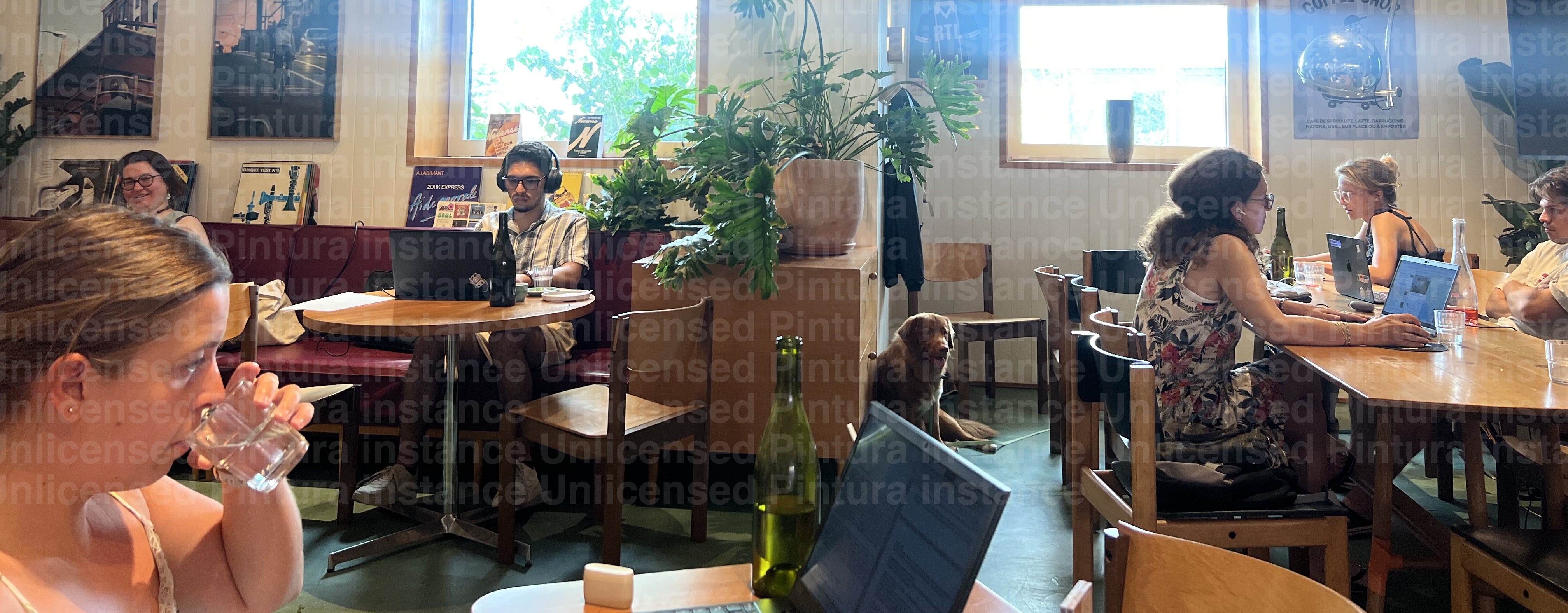
We’re all camped out here because it’s one of the very few cafes in the city with air conditioning (only 25 per cent of hotels has AC; the figure would be even less for bars and cafes). We’ve all googled “hotel lobbies/cafes with AC”, or got the heated tip from one of the hundreds of WhatsApp groups doing the rounds.
I’m betting you’ve heard there’s a heatwave across Europe, the eye of it hovering squarely over Paris.
All heat records have been broken. Paris became one of the hottest places on the planet. The average June temperature here in Paris is 23C. It’s been over a week now of temperatures 15C over that. And 38C is, on the treeless, stone-lined streets here, experienced as 44C. I walked past one of those iconic green cross pharmacy lights yesterday. It was recording 48C.
And it ain’t the half of it. Minimums have barely dropped below 30C. And it only does so around 5am (it takes that long for the concrete jungle to cool after the sun finally sets at 11pm).
People are dying - 55 people died in Paris alone in the past 24 hours. Festivals, school, gym classes are cancelled. Hundreds of thousands of chickens have perished across France. I just read an alert: a bus driver passed out from heatstroke and crashed into a tree in central Paris. I’m not sure of the details yet.
Mosques have opened their doors so people can sleep on the cool tiles. The parks in the capital are open 24 hours for the immediate future. Thousands of locals are setting up hammocks and mattresses and sleeping the night on the cool grass. Other are carrying bedding down to caves (the subterranean storage lockups under the Haussmann apartment buildings).

The city has opened up “cool spaces” where people can just…exist for the day.
Exist. Survive. Ride it out. That’s pretty much all you can manage in heat like this.
We know it’s got serious. Yesterday Paris banned alcohol consumption in public because the hospitals are not coping with the inundation of dehydrated patients and cardiac arrests.
This has been going on for ten days. Another heatwave is forecast for two weeks’ time.
This is what it looks like when a world dismisses the climate warnings for decades…
…and then lulls itself into the entirely unfounded belief that “it won’t happen quite yet”. The French thought preserving the dark grey zinc roofs that define the UNESCO-listed city centre was more important than adapting at all costs (the craft of making the zinc roofs is also UNESCO protected). Paris got onto laws that removed one-third of car lanes (converting many to parkland), and building codes requiring many new constructions to have gardens on the roof only a few years ago (albeit well ahead of much of the world).
But more significantly what is playing out here, in cheek-by-jowl intimacy, is what collapse looks like.
The heat is one thing. But the on-the-ground reality of managing the resulting complex, interconnected, unpredictable and dominoing fallout is another.
The Golfech nuclear power plant in Occitanie had to suspend production because the waters of the Garonne River became too warm to provide adequate cooling. Which puts a strain on the electricity grid, and just as everyone turns up their fans and cooling units strain. Which leads to blackouts. And on it dominoes…
My friend Emily - a subscriber here - messaged yesterday. The power had gone down in her neighbourhood. Then she got an alert - Do Not Drink The Water. The nearby water sanitation plant was down; everyone would have to buy bottled water until further notification. Of course, the supermarket shelves were cleared of water immediately. Lucky, she told me, she had paid attention and assembled the survival kit that the European Commission advised its citizens to assemble “in preparation for the ‘challenges that cannot be ignored’, namely war, natural disaster, pandemics and civil unrest”. Her kit included six litres of water.

All around the country trainlines, including the Eurostar, have gone down and roads have buckled. Escaping is not a straightforward option (not least because the canicule now extends across the entire country and much of Europe now). In Paris a train broke down underground; passengers were trapped for one hour in 50C heat. Another breakdown forced passengers to evacuate via an underground tunnel.
I live in a “chambres de bonne“, a former maid’s room situated on the top floor of most Hausmann buildings that’s been converted into a tiny (15 square-metre-tiny) apartment, pitched under the dark grey zinc roofs. From up here you see the whole city. It’s romantic. And cheap. But it’s also deadly - the temperature in these apartments tends to be even higher than the air outside. The risk of heat death when you live in one of these apartments quadruples. The Lancet Planetary Health journal in 2023 found that Paris had the highest risks of heat-related deaths out of 30 European capitals they looked at.
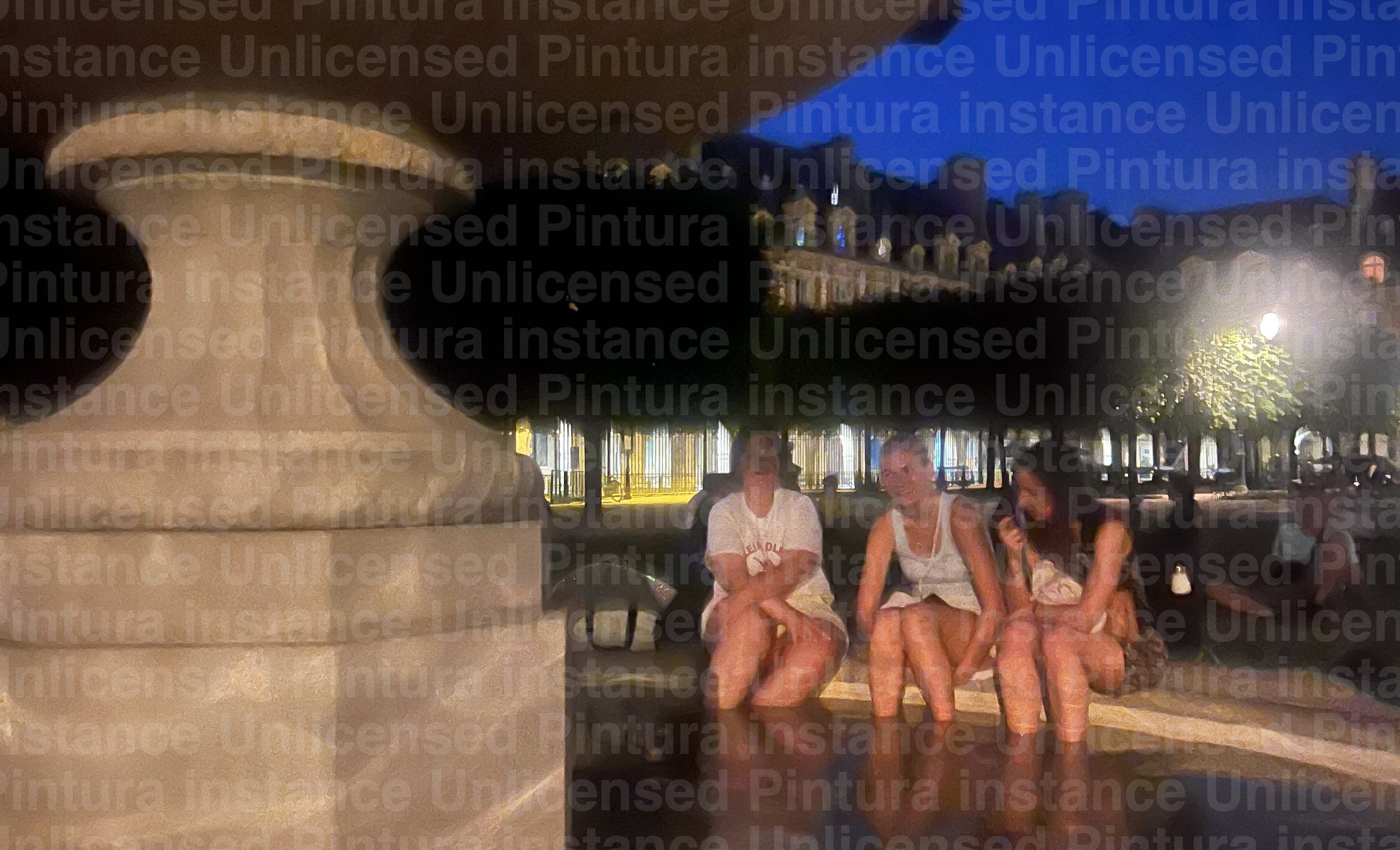
My apartment is currently 43C. It drops to 38C overnight. I slept in a tent in a forest for a few nights. I tried three nights in the apartment. Each night I would wander the city with my laptop, hopping from a workspace to a hotel foyer to a gym (where I’d take a cold shower in my bra and undies and dry myself with my dress; my soggy outfit would keep me cool for another hour or so). I sat in parks, my feet in the fountain, talking to family and friends in Australia until 1am when it was safe(ish) to head upstairs.
After opening the window, I turned on the fan, putting a wet towel over the top. I showered with my sheet and another towel and got into bed, wearing frozen socks (a tip from a WhatsApp group), the wet sheet and towel over my body, and holding two ice bricks. Within two hours everything was dry and hot again and I repeated the process.
All of which became untenable and distressing by day seven. I put a call out to my French WhatsApp communities for a more survivable solution. Gabriel came forward with a desk in his airconditioned office. Emilie offered up her music studio to sleep in (air conditioned and empty at night).
Like I say, this is what collapse looks like. It’s the breakdown of the systems and routines that keep life rolling comfortably in the way that we expect and in the way that the system demands. It’s disruptions that have cascading effects. It’s spending all day coping and finding solutions. It’s suspending cooking, cleaning, washing. It’s extra costs in every direction (many people I know have had to decamp to hotel rooms, currently at premium prices). It’s being stuck.
But it’s also huddling together with dogs and kids in a cafe for hours, the waiters pfffffing about the place good-naturedly. It’s opening up the city’s canals so the kids can swim all day.
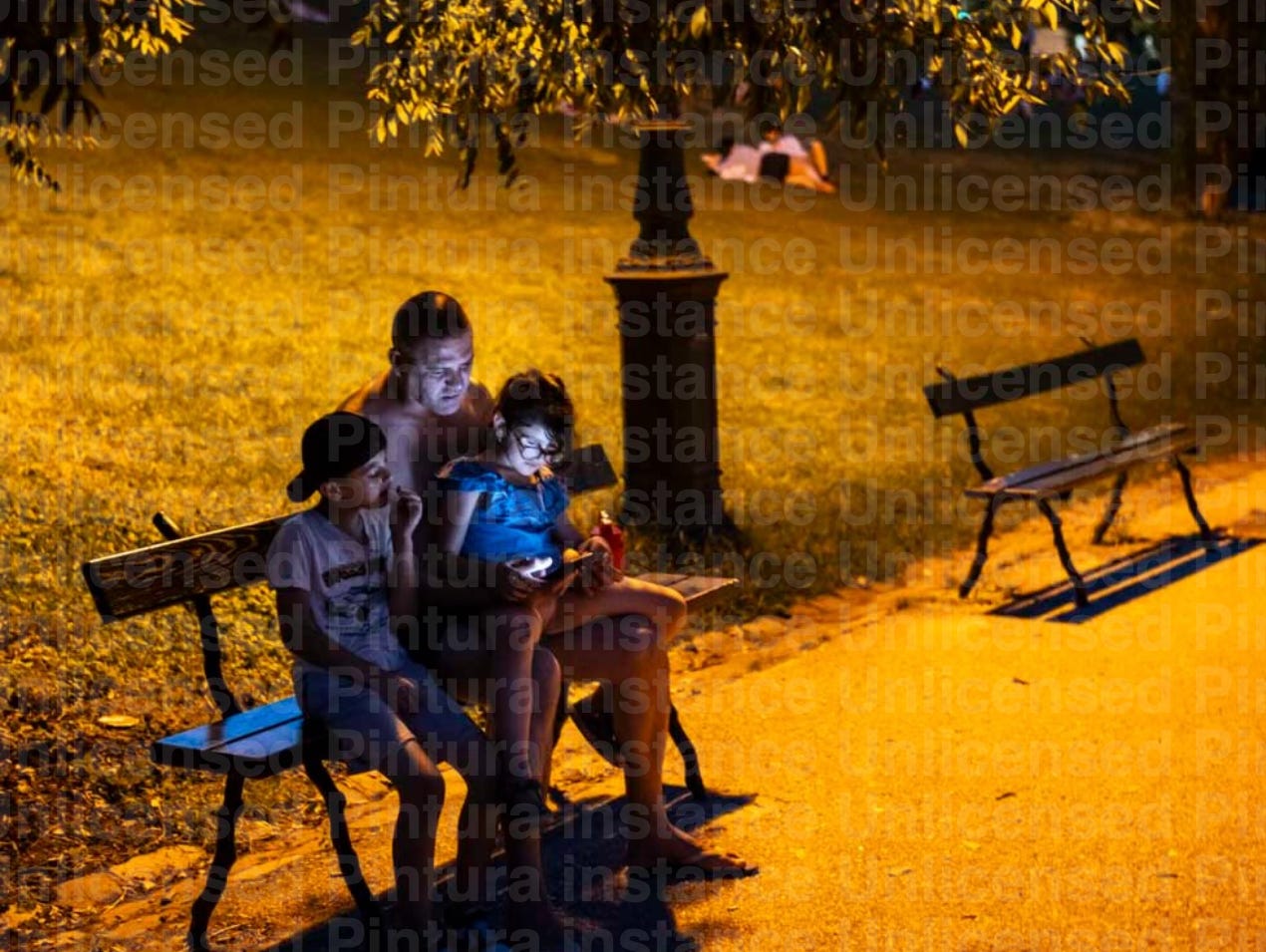
It’s turning the late night swimming into a party. It’s the police giving up on chasing teenagers (who insist on jumping into the canal from the bridges) and pulling out water pistols on them. It’s sleeping under the stars at Parc Buttes-Chaumont. It’s networks of people reaching out and helping. I have watched news footage all week of people stuck at train stations where all the trains have been cancelled, keeping their cool. On the baking streets, people are being kind and resigned. We’re sweating on each other, humaning in public spaces, having to hold the lift for stragglers, even as the hot air blasts in. We’re in this together. The feeling is surreal, suspended, but also very real and, yes, so very human.
It’s also giving up on the neoliberal imperative to keep producing and performing. Because the neoliberal myth simply can’t hold when the system is collapsing. And we can’t keep up the performance. Our days must be spent surviving with each other.
Most of you here would be aware we have entered a “monster” or “Godzilla” El Nino. Forecasts indicate it’s stronger than the one in 1877 that triggered global droughts and famines and killed 30-60 million people (about 3 per cent of the population). Researchers at the European Commission's Joint Research Centre warn this El Niño is likely to trigger "compound and non-linear systemic impacts"— simultaneous shocks to agriculture, water supplies, electricity generation, transport, food prices and inflation that reinforce one another. The worst of is also likely not to hit until 2027.
This is also what collapse looks like - things not getting better. I just checked the forecast for Paris for the next two weeks. The cool spell promised has morphed into continued high temperatures.
We’re in this now. This is it. Let’s get the group WhatsApp chats going. Let’s be kind.
Sarah xx
Hey Sarah. We don't know each other (except that I'm a reader). Your apartment sounds like hell. I happened to have landed an apartment in the city center (75004) that has AC, plus it's an old stone building that itself is on the cooler side. Friends have come over at times to work during the day. I have a guest room (though only one bath) that won't be used til July 3, though also two cats so visitors can't be allergic (also can't be smokers). I'm in an intense work period (working from home) with lots of life logistics underway so not in a space to socialize a lot, but if you're stuck, reach out!
Thanks you Sarah for sharing what life has been like in Paris during the heat wave, and what citizens are doing to band together and help each other out. It feels like a precursor of what is to come, but your observations remind us of the humanity thats needed to also survive it all 🙏🏼